When Traffic Spikes Break Your Website: Lessons from the AI.com Crash
During one of the most high-profile advertising moments of the year, AI.com experienced a surge in traffic following a Super Bowl campaign. The result was predictable, yet costly. The site struggled under pressure and ultimately failed to handle the demand.
For many businesses, this story feels distant. A Super Bowl ad is not part of the marketing plan. However, the underlying issue is far more common than it seems.
Websites break under pressure every day, and when they do, the most critical part of the user journey often fails first.
That part usually refers to your website forms.
Why High Traffic Exposes Hidden Weaknesses
Traffic spikes do not create problems. They reveal them.
In the case of AI.com, the sudden influx of visitors highlighted limitations in infrastructure and performance. For most businesses, similar issues occur on a smaller scale during:
Product launches
Paid ad campaigns
Email marketing pushes
Viral social media moments
When more users interact with your website at once, every component is tested. Forms, in particular, become a key pressure point because they rely on multiple systems working together in real time.
If even one part fails, the entire submission process can break.
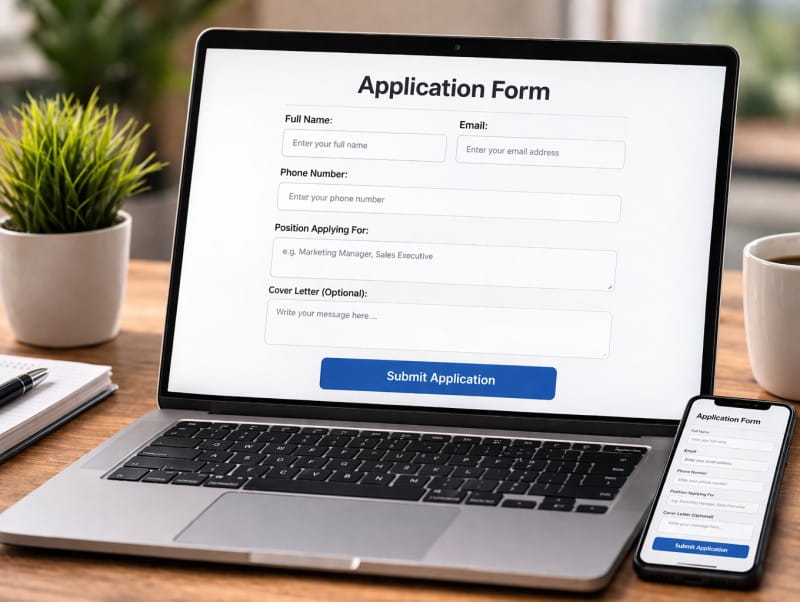
The Silent Failure of Website Forms
When a homepage crashes, you notice immediately.
When a form fails, it is often invisible.
Users may still see the page. They may even fill out the form and click submit. But behind the scenes, something goes wrong. The data is not processed, the integration fails, or the submission never reaches your system.
From the user’s perspective, the experience feels unreliable and from your perspective, leads simply disappear.
This is what makes form failures so damaging. They do not always create obvious errors. Instead, they quietly reduce your conversion rate.
What Happens When Forms Fail Under Load
During periods of high traffic, forms are more likely to encounter issues such as delayed responses, failed submissions, or broken integrations.
Servers may struggle to process multiple requests at once. APIs can time out. Validation scripts may behave inconsistently across devices or sessions.
Even if your site remains live, these smaller failures can have a significant impact. A user who encounters friction at the final step is unlikely to try again.
In practical terms, this means that your most valuable traffic can produce the weakest results if your forms are not reliable.
Why Traditional Testing Falls Short
Many teams test their forms before launching a campaign. They submit a few entries, confirm that everything works, and move on.
This approach works under normal conditions. It does not account for real-world scenarios.
It does not simulate:
High traffic volumes
Concurrent submissions
Integration delays
Unexpected edge cases
As a result, forms that pass initial testing can still fail when it matters most.
The Cost of Getting It Wrong
For businesses investing in growth, the cost of form failure is not just technical. It is financial.
Every click, visit, or campaign has a cost attached. When users reach your form, they represent potential revenue. If that final step fails, the entire journey loses value.
The AI.com incident highlights this at scale. Following a major advertising push, the platform reportedly experienced issues that contributed to losses estimated at around $80 million in missed opportunities and impact. While most businesses will not face losses on that scale, the underlying principle remains the same.
When your website or forms fail during peak demand, the cost is immediate and significant.
For SaaS founders, this can mean missed sign-ups during moments of high intent as for agencies, it can result in underperforming campaigns and difficult client conversations.
Even at a smaller scale, these losses compound quickly.
How qa.ai Helps Prevent These Failures
This is where proactive testing becomes essential.
qa.ai is designed to continuously monitor and test your website forms, ensuring they perform reliably even as conditions change.
Instead of relying on one-time checks, qa.ai simulates real user behaviour on an ongoing basis. It submits forms, tracks how data is processed, and identifies any breakdown in the flow.
If a failure occurs, you are alerted quickly with clear insight into what went wrong.
This allows you to fix issues before they affect a large number of users, rather than discovering them after a campaign has underperformed.
From Reactive to Proactive Performance
The key difference is not just detection, but timing.
Without monitoring, issues are often discovered after the damage is done. With qa.ai, you gain visibility into your forms as they operate in real conditions.
This means you can:
Identify weaknesses before traffic spikes
Validate performance during campaigns
Maintain consistent user experience over time
Instead of reacting to problems, you stay ahead of them.
Why This Matters More Than Ever
As businesses rely more heavily on digital channels, the margin for error becomes smaller.
Users expect seamless experiences. They do not wait for broken forms to be fixed. They move on.
At the same time, competition continues to increase. Every lost lead is an opportunity for someone else.
Ensuring your forms work reliably is no longer a technical detail. It is a core part of your growth strategy.
It’s Better to Be Prepared
The AI.com crash is a reminder of how quickly things can go wrong when systems are pushed beyond their limits.
While most businesses will not experience Super Bowl-level traffic, the same principles apply at every scale.
Your website needs to perform when it matters most, and your forms need to work every time.
Relying on manual checks is no longer enough.
Make Sure Your Forms Are Ready with qa.ai
If you are investing in traffic, campaigns, or growth, you need confidence that your website can handle it.
qa.ai helps you continuously test and monitor your forms, so you can catch issues early, fix them quickly, and ensure every opportunity is captured.